Watch: POTS (Postural Orthostatic Tachycardia Syndrome)
POTS (Postural Orthostatic Tachycardia Syndrome)
POTS (Postural Orthostatic Tachycardia Syndrome)
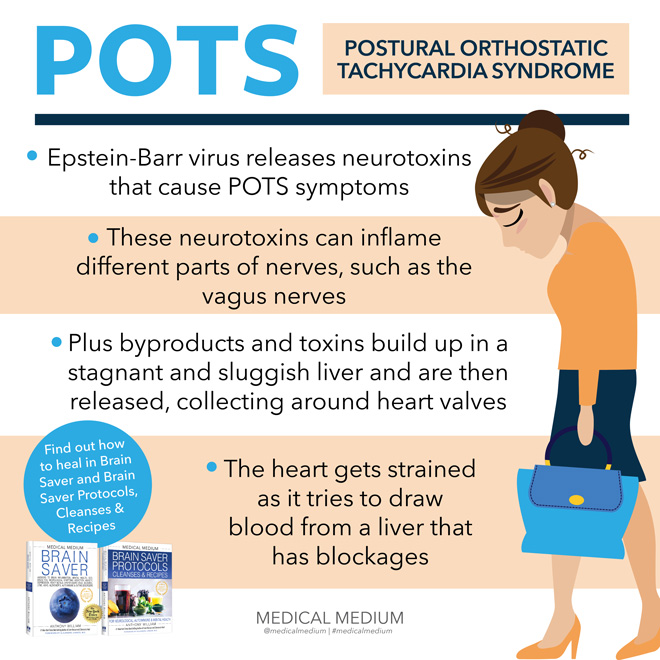
The cause of these mystery symptoms is byproducts and toxins built up in a stagnant, sluggish liver being released and collecting around heart valves. POTS symptoms go way beyond problems with getting up, leaning forward, and leaning down—because POTS is a viral neurotoxin disorder.
One reason POTS is so difficult is that it’s a chronic Epstein-Barr virus infection. The virus has been in the liver for a long time, and it’s this virus releasing the neurotoxins that causes POTS symptoms, ranging from dizziness to difficulty exercising to light-headedness to fainting, fatigue, brain fog, nausea, chest pain, blurred vision, racing heart, and unstable blood pressure. When the liver is stagnant, sluggish, and filled with years’ worth of viral toxins, various areas of the liver become blocked. This makes it harder for blood to draw through the liver to get to the heart, putting the heart under a continual strain. When someone quickly or even normally stands up, walks uphill, or exerts themselves, they can get light-headed and dizzy or faint, and they can have an increased heart rate. The heart is struggling to draw blood out of the liver, which can destabilize blood pressure.
Often in POTS, viral neurotoxins saturate and inflame nerves such as the vagus. Depending on which areas of the nerves are saturated, viral symptoms can vary. Everybody’s POTS symptoms vary because everybody’s immune system, viral load, and mutations of viruses vary, and everyone’s liver capacity for toxins varies.
The tachycardia aspect, in many cases, is neurological tachycardia, especially if the doctor can’t find an actual, physical ailment with the heart. Messages from the brain can get derailed as they’re traveling through the brain stem out into vagus nerves and to the heart. Meanwhile, the heart is physically okay. These derailed nerve messages can create a neurological tachycardia that means any quick movements, such as turning your head or getting up off the ground, can send an incomplete signal to the heart, causing an increased heart rate.
For healing support, refer to Brain Saver and Brain Saver Protocols, Cleanses & Recipes.
This item posted: 23-Sep-2022

)
